
Design Guide
Grasscloth vs. Vinyl: Which Wallpaper Fits Your Maui Room?
These are the two materials we get asked about most. Grasscloth brings the natural, woven texture that defines so much of island-inspired design. Vinyl brings durability and washability that natural fiber simply can't match. Neither is the 'better' choice across the board — the right one depends entirely on the room. Here's how we walk clients through the decision.
What Grasscloth Wallpaper Offers
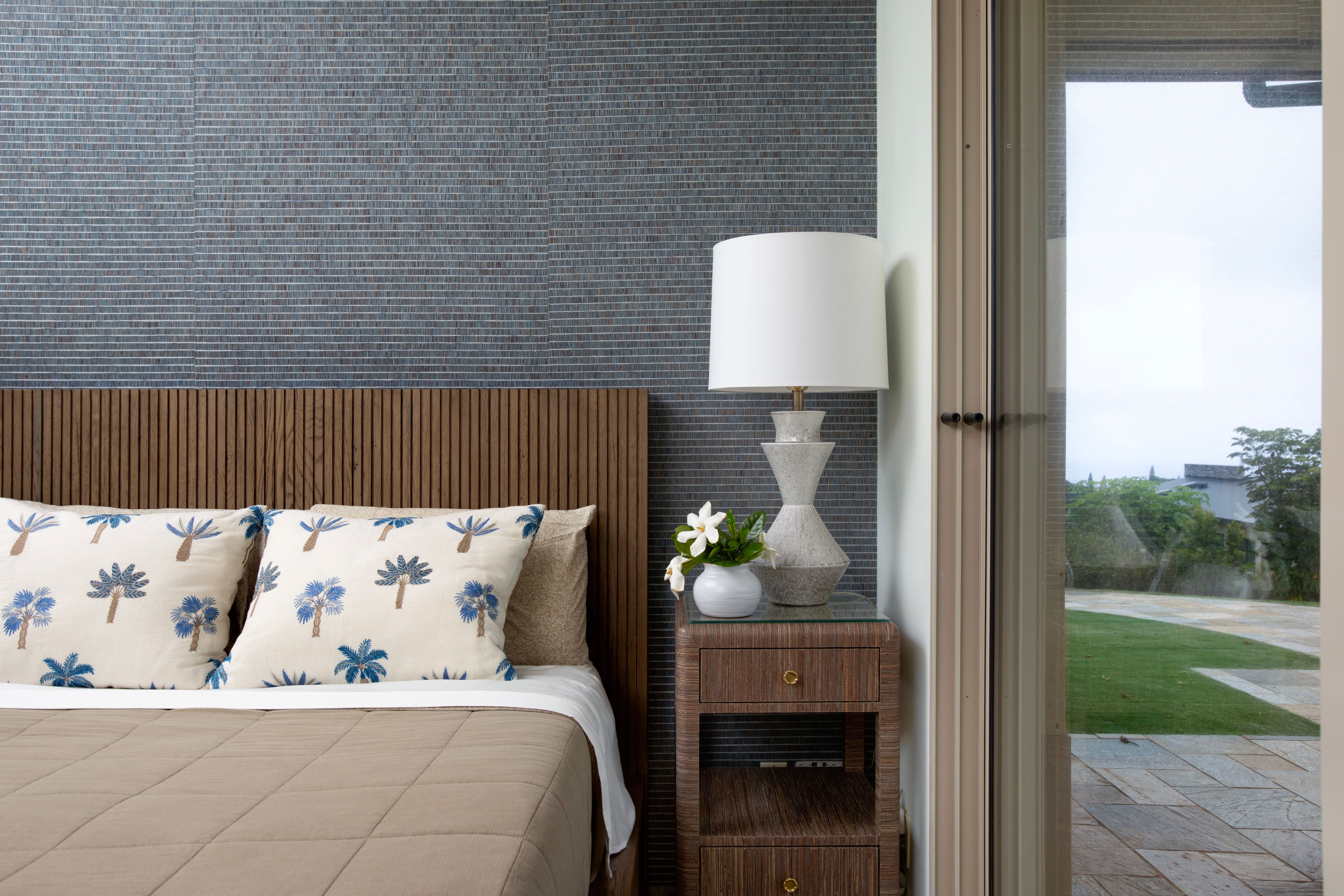
Grasscloth is woven from natural fibers like arrowroot, jute, hemp, or sisal, backed onto a paper substrate. No two panels are exactly identical, which gives a wall a handmade, organic texture that vinyl simply can't replicate. It's a favorite for primary bedrooms, living rooms, and entryways where clients want warmth and depth on the walls.
The tradeoff: grasscloth is delicate. It's more difficult to clean, can shed slightly during installation, shows seams more visibly than vinyl, and — as we cover in our humidity guide — absorbs moisture rather than resisting it. It's also generally a higher investment per roll.
What Vinyl Wallpaper Offers
Vinyl wallpaper is engineered for performance. It's washable, resists moisture and mildew, holds up to scuffs and daily wear, and comes in an enormous range of patterns — including designs that convincingly mimic grasscloth, linen, or plaster at a glance. For kitchens, bathrooms, hallways, and family rooms, vinyl is almost always the more practical choice.
The tradeoff: vinyl doesn't have the same tactile, organic depth as real natural fiber. In direct sunlight or side-lighting, a trained eye can usually tell the difference, though most patterned vinyls read as 'textured' rather than obviously synthetic.
Room-by-Room: Which One Wins
- Primary bedroom: Grasscloth, if the room is dry and well-ventilated — this is where it shines most.
- Living room / great room: Either works; grasscloth for warmth, vinyl for a bold pattern that needs to hold up to daily life.
- Kitchen: Vinyl. Grease, steam, and splashes are a poor match for natural fiber.
- Bathroom / powder room: Vinyl only — see our guide on humidity and wallpaper for why.
- Entryway: Grasscloth makes a strong first impression if the entry isn't directly exposed to open doors and trade winds; otherwise, vinyl.
- Vacation rental / high-turnover space: Vinyl, for easier cleaning and durability between guests.
A Third Option: Non-Woven
If you like the idea of grasscloth's texture but want more durability, ask us about non-woven wallpapers with woven or linen-look finishes. They split the difference — more breathable and textural than solid vinyl, more resilient than true natural fiber.
Our Recommendation Process
During your consultation, we look at four things before recommending a material: the room's humidity and airflow, how much daily wear the wall will see, your maintenance preferences, and the overall design direction of the space. Most homes end up using a mix of both — grasscloth in the primary suite, vinyl in the kitchen and baths — rather than one material throughout.
Not sure which is right for your space? Bring us photos of the room and we'll talk through the options before you commit to a single roll.
Where we source each look: For true natural grasscloth, Phillip Jeffries is the industry leader we reach for most. For durable vinyl with a bold, pattern-forward feel, we love Thibaut and Schumacher collections. Romo rounds things out with textured, natural-fiber-look options that split the difference between the two.
NEXT STEP
Compare the Material in Person
Bring the room, project requirements, or product ideas to MWC. We can help compare material, texture, pattern scale, samples, and suitability before ordering.