WALLCOVERING GUIDE
The finished wall depends on what is underneath it. Existing texture, repairs, coatings, old wallpaper, moisture concerns and the specified material can all influence preparation. This guide explains why wall preparation is a project-specific part of professional wallcovering installation.
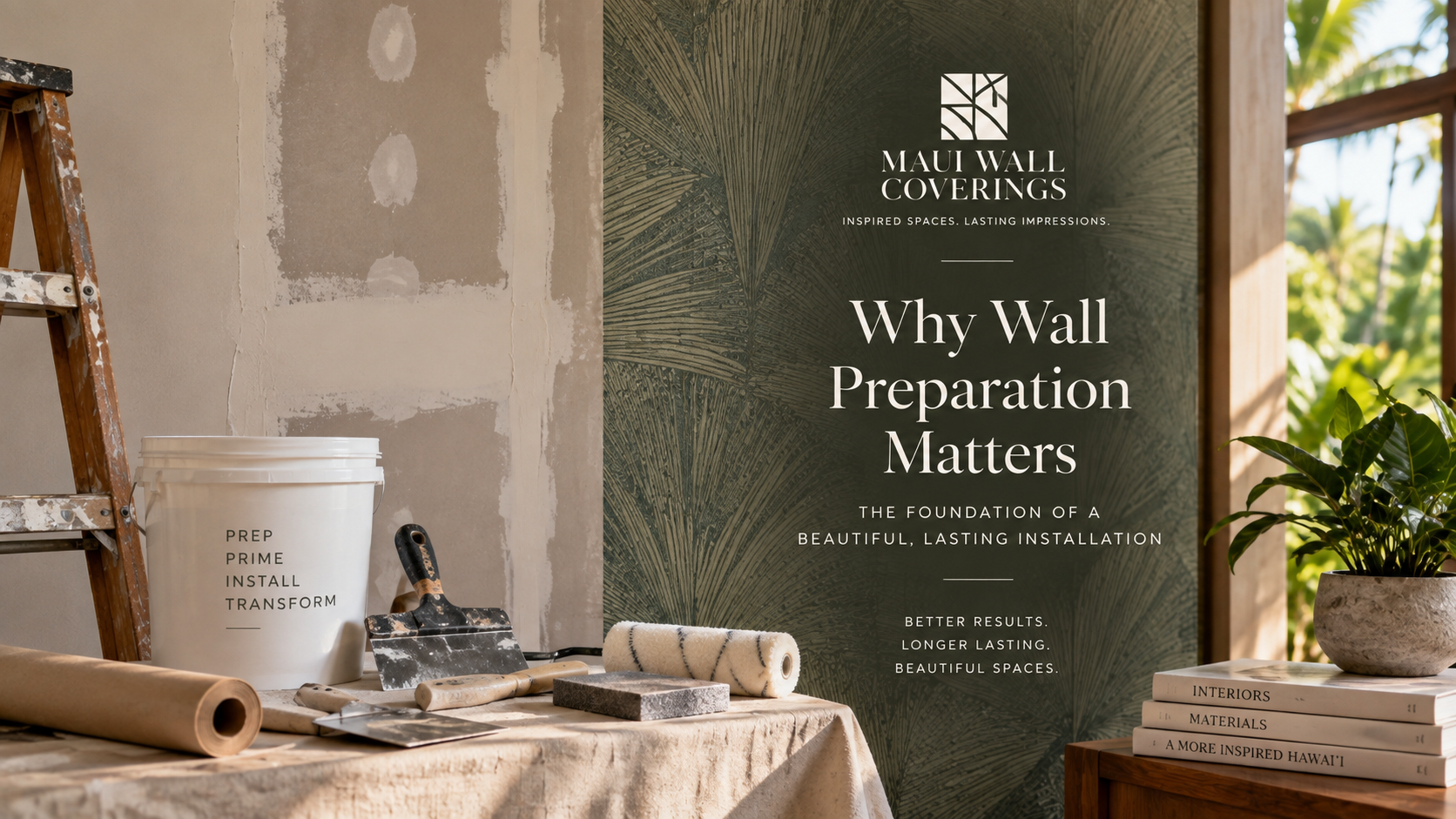
When people imagine a wallcovering project, they naturally focus on the material they will see.
The pattern. The texture. The color. The finished room.
But the final result also depends on something that becomes invisible once the installation is complete: the wall underneath.
Wallcovering is a finish, not a repair system. Existing texture, previous coatings, patched areas, new drywall, old wallpaper, contamination, moisture concerns and other substrate conditions can influence what needs to happen before installation.
At Maui Wall Coverings, wall preparation is therefore considered part of the project from the beginning—not something to discover when the installer arrives.
A wall can look perfectly acceptable from across the room and still require attention before wallcovering is installed.
Paint can conceal previous repairs. Texture may become much more apparent beneath certain materials. Old adhesive or wallcovering may remain below the existing finish. New construction can present different conditions from an occupied residence.
This does not mean every project requires extensive preparation. It means the existing wall needs to be evaluated in relation to the specific wallcovering being installed.
Paint and wallcovering interact with a wall differently.
Some wallcoverings—particularly smooth, reflective or refined materials—can make irregularities more noticeable rather than less noticeable.
Light can further emphasize those conditions.
This is one reason MWC does not treat preparation as a generic checklist. The expected finished appearance matters.
Wall texture is common in Hawaii homes.
Whether an existing texture is appropriate beneath wallcovering depends on several factors, including the texture itself and the material being specified.
A heavily textured wall and a subtle texture are not equivalent. Likewise, a substantial wallcovering and a delicate smooth surface may respond differently to the same substrate.
The correct preparation should therefore be determined after the wall and wallcovering are considered together.
MWC intentionally does not publish a universal procedure for converting textured walls to wallcovering-ready surfaces because the appropriate scope depends on the actual project.
New construction presents its own considerations.
A newly completed wall may still involve different materials across drywall paper, joint compound, fasteners and repaired areas.
The fact that a wall is new does not automatically determine the preparation required for the specified finish.
For designers, architects and general contractors, involving MWC before the final wallcovering phase can help identify expectations for the wall surface before installation is scheduled.
A painted wall may appear straightforward, but the existing coating is only one part of the condition.
MWC may need to consider the surface quality, previous repairs, contamination, adhesion concerns and the intended wallcovering.
The appropriate next step depends on what is actually present. The goal is not to perform unnecessary work. It is to establish a suitable foundation for the specified wallcovering.
Installing new wallcovering over an unknown existing system can introduce unnecessary uncertainty.
Previous wallpaper, backing material, adhesive and earlier repairs may all affect the condition of the substrate beneath.
For this reason, wallpaper replacement should be evaluated as more than simply changing one pattern for another.
MWC provides wallcovering removal and can evaluate the resulting wall condition before determining the next stage of the project.
This is particularly relevant in Hawaii.
Wallcovering should not be used to conceal an active moisture problem.
If there are signs of water intrusion, persistent dampness, deterioration or another building-related issue, the underlying condition should be investigated and appropriately resolved before the decorative finish proceeds.
MWC can identify concerns relevant to the wallcovering scope, but building repairs or other regulated work may require the appropriate licensed professional.
There is no single preparation specification that is appropriate for every material.
A smooth metallic wallcovering can place different visual demands on the substrate than a dimensional or heavily textured material.
Natural wallcoverings, murals, papers and performance products can also introduce their own considerations.
The finish helps determine what the wall needs.
That relationship is part of MWC's project review and specification process.
Clients occasionally ask which wallpaper primer they should purchase.
There is not one answer that should be applied to every wall and every wallcovering.
The existing substrate, wall condition, specified material, adhesive system and manufacturer requirements can influence the appropriate preparation system.
MWC determines those requirements for the actual project rather than publishing a universal product recommendation.
A properly considered wallcovering system is not only about how the wall looks on installation day.
Future maintenance, eventual removal and the condition of the substrate can also matter.
That is another reason preparation should be considered as part of the wallcovering system rather than simply as an additional construction step.
The answer depends on the work required.
MWC can evaluate wall conditions from the perspective of the wallcovering installation, define relevant requirements and coordinate the preparation process.
Some preparation-related work may be within the services MWC can provide directly. Other conditions can require work by an appropriately licensed contractor.
When that occurs, MWC's role is to coordinate the wallcovering requirements with the appropriate trade rather than represent work outside our legal scope.
Preparation problems become most disruptive when they are discovered immediately before installation.
By that point, wallcovering may already be on site, installers scheduled and other construction activities completed.
Earlier evaluation gives the project team time to understand the wall condition and coordinate any necessary work before it affects the installation schedule.
You do not need to diagnose the wall yourself.
For an initial project review, send us:
Architectural drawings and finish schedules are useful for larger projects.
MWC can then determine whether additional site evaluation or coordination is appropriate.
The visible finish and invisible foundation should be planned together.
MWC connects:
Wallcovering Selection → Site Review → Preparation Requirements → Preparation Coordination → Professional Installation → Completion
The client understands why preparation matters, while the technical procedures, product systems and project-specific standards remain part of MWC's professional service.
Homeowners: send us photographs of the room and the wallcovering you are considering.
Designers & architects: involve MWC early when wallcovering is part of the finish specification so substrate expectations can be coordinated with the project team.
General contractors: contact us before the wallcovering installation phase when preparation requirements need to be coordinated with other trades.
Replacing existing wallpaper? MWC can review removal, resulting wall conditions and the path toward the new installation.
Off-island owners: we can coordinate the wallcovering scope locally, including evaluation of preparation requirements before installation.
