WALLCOVERING GUIDE
Professional wallcovering installation begins before the first panel goes on the wall. Site conditions, material, preparation, project sequencing and installation all influence the finished result. This guide explains what Maui clients can expect without turning professional installation into a DIY procedure.
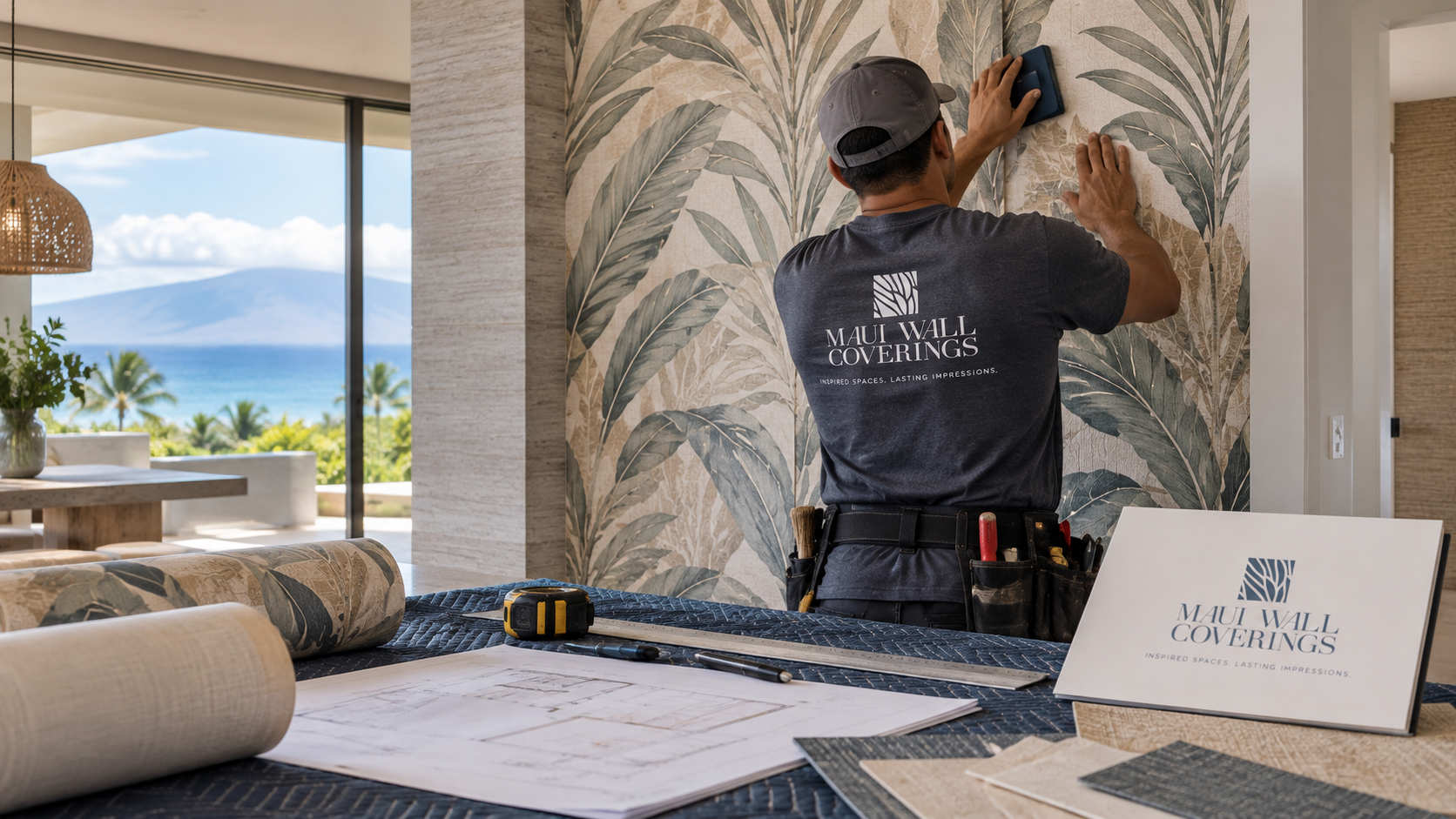
The most visible part of a wallcovering project is the finished wall.
But professional installation begins well before the first panel is installed.
The wall itself, existing conditions, selected material, preparation requirements, project sequencing and site readiness can all influence the installation.
This is particularly important on Maui, where projects range from occupied residences and vacation properties to new construction, resort residences and commercial spaces.
At Maui Wall Coverings, installation is treated as one part of a larger process—not as an isolated trade arriving at the end of the project.
Before scheduling an installation, we first need to understand what is being installed and where.
A straightforward feature wall in a finished bedroom is very different from a stairwell, powder room, curved wall, double-height space or full residence under construction.
The wallcovering itself matters as well. Printed papers, non-wovens, grasscloth, textiles, murals and specialty surfaces can have different characteristics and manufacturer requirements.
For that reason, MWC reviews the project and wallcovering before determining the appropriate next steps.
If you already purchased the material, send us the manufacturer and pattern information along with photographs or plans of the space.
One of the most common misconceptions about wallpaper installation is that the installer simply arrives and covers the existing wall.
The condition beneath the wallcovering matters to the finished result.
Existing texture, previous wallpaper, repairs, coatings, wall damage, contamination or signs of moisture may need attention before installation can proceed.
A premium wallcovering should not be expected to correct an unsuitable wall.
This is why site conditions are evaluated before installation rather than after a problem becomes visible through the finished material.
Some walls require very little intervention. Others may require additional preparation before they are suitable for wallcovering.
The extent of that work depends on the existing conditions and the wallcovering being specified.
MWC can identify wall conditions relevant to the wallcovering installation and coordinate the required preparation. Where work falls outside MWC's legal scope, it can be coordinated with appropriately licensed contractors.
Preparation should be determined by the project—not assumed from a generic wallpaper checklist.
The wallcovering itself should also be considered before work begins.
The objective is to confirm that the material received corresponds with the project and that obvious issues are identified before installation progresses.
For products purchased or procured through MWC, receiving and inspection can be integrated into the project process.
For client-supplied material, we may request product information in advance and review the material before installation.
This is especially valuable for specialty, natural, custom or made-to-order wallcoverings.
Professional wallcovering installation is not simply about getting material onto the wall.
The way a pattern relates to the architecture affects the finished room.
Doors, windows, corners, cabinetry, focal walls, ceiling transitions and other architectural elements can influence how a wallcovering is visually experienced.
Murals make this particularly obvious, but layout also matters with repeating patterns and specialty materials.
The layout decisions themselves are part of the installer's professional expertise, so MWC does not publish a universal seam-placement or pattern-layout formula. Instead, the installation is evaluated in relation to the actual room and material.
Once the walls and material are ready, professional installation begins.
The exact process varies according to the wallcovering and project, but the work generally involves careful layout, material handling, installation and detailing around the architecture.
Different products may require different installation techniques.
Rather than applying one standard method to every wallcovering, MWC follows the requirements appropriate to the specified material and project conditions.
The room should be ready, the wall should be suitable, the correct material should be available, and the installation should proceed as a controlled finish process.
Good project coordination reduces delays.
In an occupied home, furniture and personal belongings may need to be moved away from the work area. In construction projects, the installation needs to be properly sequenced with other trades.
Lighting, cabinetry, electrical work, painting, flooring protection and other activities can affect access to the walls.
MWC communicates project-specific requirements before installation rather than relying on clients to determine site readiness themselves.
For designers, contractors and project managers, early coordination is particularly useful when wallcovering is part of a larger construction schedule.
Many wallcovering projects take place in homes that are already furnished and occupied. That is normal.
The installation plan can be coordinated around the areas being worked on, access requirements and the scope of the project.
For larger residences, work may be phased by room or area when appropriate.
Vacation residences and second homes can also be coordinated while the owner is off island, provided access and project decisions have been arranged in advance.
Completion is more than putting away the tools.
The finished installation should be reviewed as part of project closeout.
Natural materials deserve particular context here. Grasscloth and other handcrafted wallcoverings can display seams, tonal changes and material variation that are inherent to the product rather than installation defects.
Understanding those characteristics before selection and installation helps establish the correct expectations for the finished wall.
MWC's role is to connect those expectations from specification through completion.
Wallcovering is often one of the later finishes installed in a construction project, but decisions about it should not necessarily wait until the end.
Early involvement can help identify the intended material, wall conditions, preparation requirements, quantities and procurement schedule before they become time-sensitive.
This is particularly relevant on Maui, where product availability and shipping can affect project schedules.
For designers, architects and contractors, MWC can participate as the specialized wallcovering resource rather than treating installation as an isolated final task.
That's fine.
MWC can work with client-supplied wallcovering, subject to project and material review.
Send us:
We can then determine what is needed to evaluate the installation.
If you have not ordered the material yet, contacting us first can help connect the quantity, specification and procurement decisions with the eventual installation.
The finished wall may be the part everyone sees, but successful installation depends on decisions made much earlier.
MWC approaches the process as:
Project Review → Material Review → Site Conditions → Preparation Coordination → Installation → Completion
The detailed technical decisions within those stages remain project-specific.
Whether you already have the wallpaper or are still choosing it, Maui Wall Coverings can help determine the appropriate path from the existing wall to the finished installation.
Homeowners: send us photographs of the space and the wallcovering you are considering.
Designers, architects and contractors: send project drawings, wallcovering specifications or finish schedules for review.
Off-island property owners: MWC can coordinate material, site preparation requirements and installation locally for your Maui property.
Need help choosing the wallcovering first? Visit the MWC Studio for samples, sourcing and design assistance.
